What happens in a first counselling session?
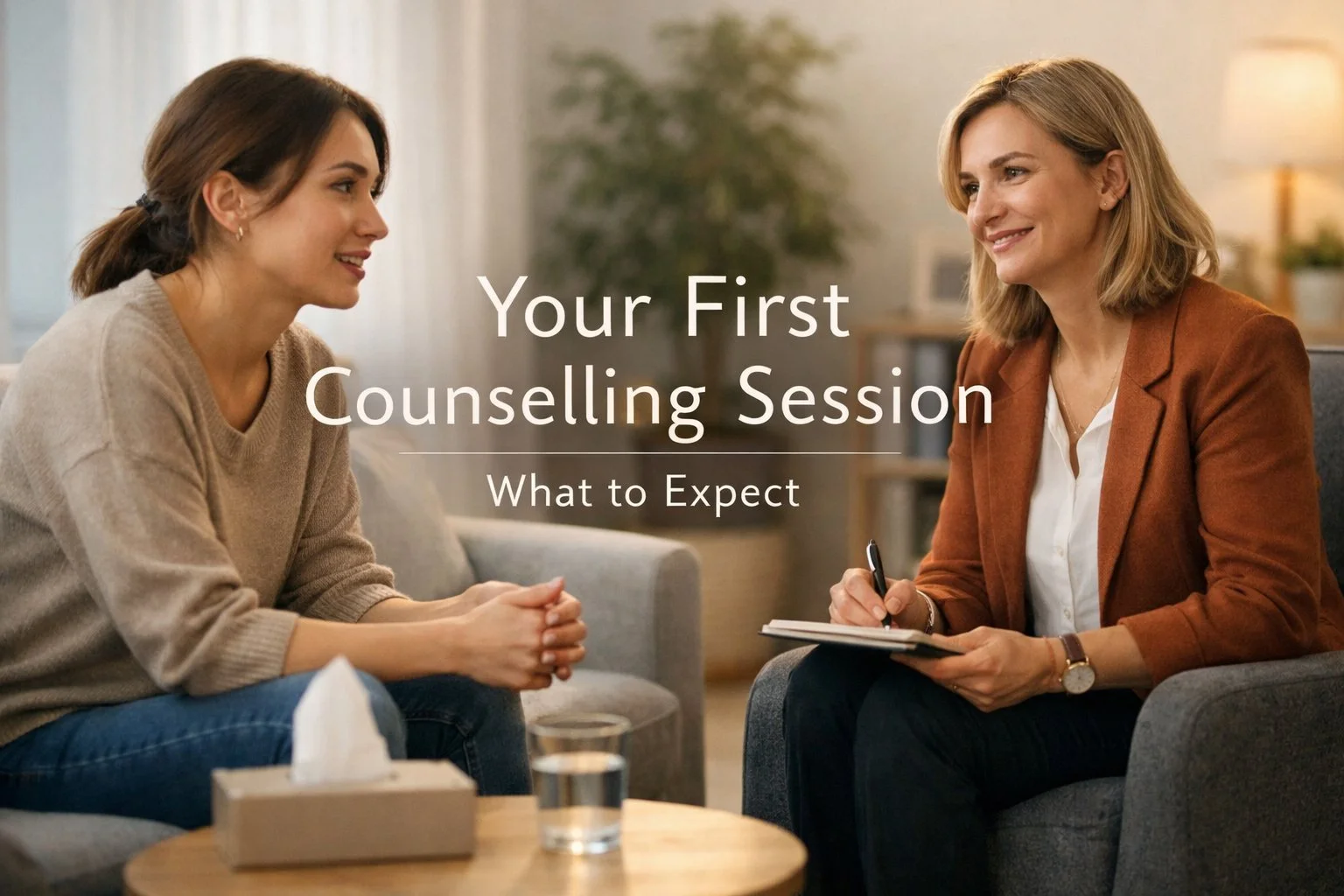
Most people who book a first counselling session have spent longer than they would like to admit thinking about it. Weeks, sometimes months. They have looked at the website, closed the tab, opened it again. They have wondered whether what they are dealing with is bad enough to warrant it, whether they will know what to say, whether it will be awkward.
This is normal. And it is worth saying clearly: the first session is not what most people expect.
Before you arrive
You do not need to prepare anything. There is no intake form to fill in the night before, no list of symptoms to bring, no requirement to have organised your thoughts into something coherent. Most people arrive not quite knowing where to start. That is fine. Your counsellor has done this many times and knows how to help you find your way in.
If you are coming in person, try to give yourself a few minutes either side of the session rather than rushing straight from work or another commitment. Not because the session will not work otherwise, but because arriving slightly less frantic means you settle more quickly.
If you are coming online or by phone, find somewhere private where you are unlikely to be interrupted. The session is 50 minutes and that time is yours. It is worth protecting it.
What happens when you get there
Your counsellor will welcome you and make sure you are comfortable. If it is a face to face session, you will sit together in a quiet, private room. If it is online or by phone, you will just start talking. There is no formal procedure, no clipboard, nothing clinical about it.
The first thing your counsellor will usually do is talk through a few practical things. Confidentiality, how sessions work, what to do if you need to cancel. This takes a few minutes and then the session is yours.
After that, they will invite you to say something about what has brought you here. Not a prepared speech. Just whatever is on your mind. It might be something specific that has happened. It might be a general feeling that has been building for a while. It might be that you are not quite sure and you just know something is not right.
Any of those is a perfectly good place to start.
What your counsellor is doing
They are listening. Properly. Not waiting for a gap to give you advice, not mentally categorising you, not judging what you say or how you say it. Just listening, and occasionally reflecting back what they are hearing to help you understand it more clearly yourself.
You might find that things come out that you did not expect to say. That happens. The experience of being genuinely listened to, without the other person needing to fix it or make it more comfortable for themselves, is unusual enough that it can open things up quite quickly.
You might also find that the session feels slower than you expected. That is fine too. Not every first session is a breakthrough. Some people leave feeling lighter. Others leave feeling much as they came in, but clearer. Both are useful.
What you do not have to do
You do not have to talk about your childhood. You do not have to have a diagnosis or a label for what you are experiencing. You do not have to commit to anything beyond this one session.
A first session is not a contract. It is a conversation. You are finding out whether this person and this process feel like something you could work with. Your counsellor is doing the same.
If it does not feel right, that is important information, and a good counsellor will say so.
What happens at the end
Your counsellor will bring the session to a close gently, usually with a few minutes to spare so you do not feel cut off mid-thought. They will check in about how you are feeling and talk briefly about whether and how you might want to continue.
There is no pressure either way. Some people book their next session on the spot. Others want a few days to think. Both are completely normal and neither is the wrong answer.
You will probably leave feeling something. Relief, sometimes. Tiredness, often. A sense that something has shifted slightly, even if you cannot quite say what. That is the beginning of the process. It does not have to feel dramatic to be working.
One more thing
The question people most often have after a first session is not whether it was useful. It is why they waited so long.
You do not have to keep waiting. Your first conversation with a Counselling Camp counsellor is free, and there is no obligation to continue.
Ready to take the next step?
Book a free consultation